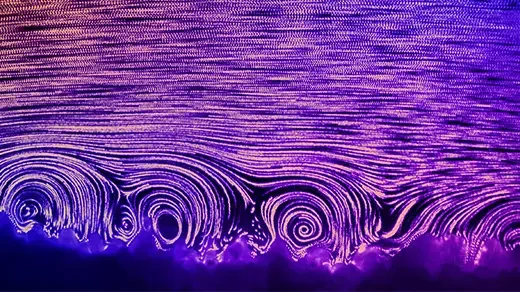
Coral looks motionless, but under a microscope it is anything but. Tiny hairs on the surface of each polyp beat in coordinated rhythm, driving delicate whirlpools that pull fresh seawater across the colony and carry oxygen to cells that would otherwise suffocate in still water. A new study has measured these miniature currents in detail, revealing how important they are to coral physiology.
The vortices form because the beating cilia are arranged in patterns that create swirling flow rather than a straight push. That geometry lets a colony draw oxygen from a surprisingly large volume of water, a useful trick in the crowded, competitive environment of a reef. Without it, the thin layer of water touching the coral would quickly lose its oxygen.
The catch is temperature. When the water grows too warm, the cilia slow and the vortices weaken, just as reefs are facing their greatest heat stress. The finding adds an often-overlooked physical dimension to the bleaching crisis, suggesting that how a reef breathes may matter as much as how much heat it can tolerate.