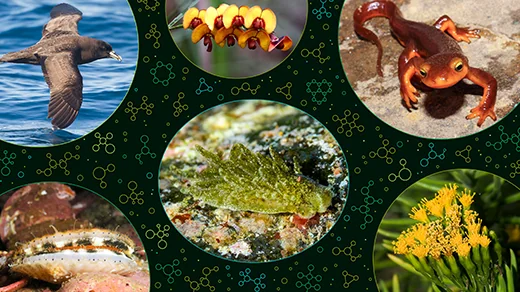
Ecology has long recognised keystone species, organisms whose influence far exceeds their abundance. A related idea is gaining traction: keystone molecules, rare chemical compounds that quietly hold communities together. Present in tiny quantities, they can determine whether a species thrives, flees or dies.
Examples come from across the natural world. A pheromone released by a single predator can send prey into hiding and reshape where they feed. A compound exuded by one plant can suppress competitors or attract the insects that defend it. In the ocean, trace chemicals guide larvae to the right surface to settle on, deciding the fate of a reef.
Because these molecules operate at such low concentrations, they are easy to overlook and difficult to study. But their effects ripple through food webs, and losing the species that produces them can unravel relationships that seemed unrelated. Mapping the chemical conversations that structure ecosystems is opening a new front in conservation, one in which the most important thing in a habitat may be invisible to the eye.