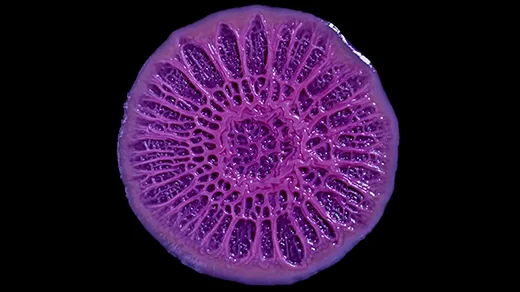
Bacteria rarely live alone. They gather into biofilms, dense communities bound together by a self-produced matrix, and these communities take on shapes that no single cell could predict. A soft-matter physicist studying the phenomenon has shown how simple interactions between cells can generate complex, reproducible architecture.
The key is that cells are physical objects. They push against one another, stick to surfaces, consume nutrients and grow. When these basic ingredients are combined, patterns emerge: wrinkles, folds, fingers and branching structures, depending on conditions such as nutrient supply and mechanical confinement. The same physics governs how paint dries and how mud cracks.
Micro decisions, in other words, produce macro consequences. The finding matters because biofilms are everywhere, from dental plaque to industrial pipelines to chronic infections, and their shape affects how easily they can be disrupted. Understanding how they form may be a step toward controlling them, whether the goal is cleaning a water system or defeating an infection that has learned to armour itself.