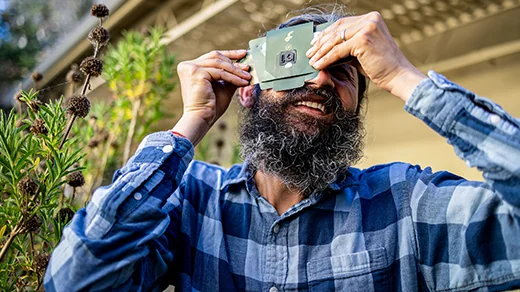
Manu Prakash builds instruments that cost a few dollars and work anywhere. A paper microscope that folds like origami. A centrifuge spun by hand with string. A device that counts parasites in a drop of blood without electricity. Each began with a question that seemed either urgent or trivial, and Prakash refuses to distinguish between the two.
He calls his approach recreational biology, a deliberate provocation. Curiosity, in his view, is not a luxury reserved for well-funded laboratories but the engine that produces both useful tools and unexpected discoveries. His group works on global health problems and on puzzles such as how water striders walk, often with the same equipment and the same mindset.
The results have been widely adopted in clinics and schools, and the philosophy has attracted attention beyond science. Prakash argues that the barrier to invention is rarely money but the assumption that serious problems require serious apparatus. Cheap, robust tools, he suggests, can change who gets to ask questions.