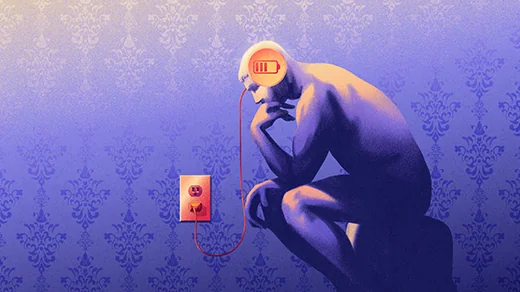
The human brain is about two per cent of body weight and consumes roughly twenty per cent of the energy we take in. That disproportion is the price of having a large, densely connected organ, and it has shaped our evolution in ways researchers are still working out. Studies of neural metabolism are revealing both how the brain spends its budget and what it had to give up to afford it.
Most of the energy goes not into signalling but into maintenance: restoring ion gradients, recycling neurotransmitters and keeping cells alive between firings. This means the cost of thinking is largely fixed, and increases only modestly when the brain works harder. A demanding mental task may add just a few per cent to an already expensive baseline.
The evolutionary implications are considerable. An organ this costly must pay for itself, which constrains body size, diet and the length of childhood. Understanding the energetics of the brain helps explain why large brains evolved only in a few lineages, and why they are vulnerable when energy supply falters.