Biology has traditionally treated shape as a consequence: genes specify proteins, proteins build tissues, and tissues take whatever form the underlying instructions dictate. L. Mahadevan argues that the arrow often points the other way. Physical forces, constrained by geometry and environment, generate forms, and those forms then shape what an organism can do and how it evolves.
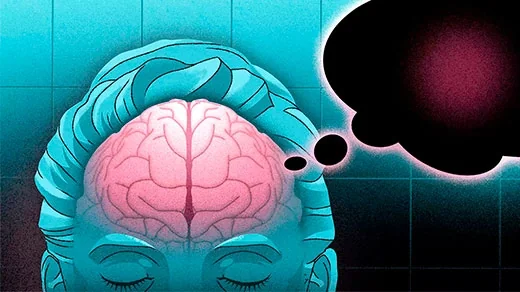
His examples range across scales. The folds of a developing brain emerge from the mechanics of a growing sheet confined within a limited space. The architecture of an insect nest reflects simple rules about how materials stack and settle. In each case, a small number of physical principles accounts for a surprising variety of outcomes.
Mahadevan calls this an embodied view of biology, in which behaviour arises from the interaction of body, physics and environment rather than from computation alone. The perspective is gaining ground as researchers find that mechanical constraints can predict biological structures that genetic explanations struggle to account for, from the wrinkles on a leaf to the gait of a walking insect.