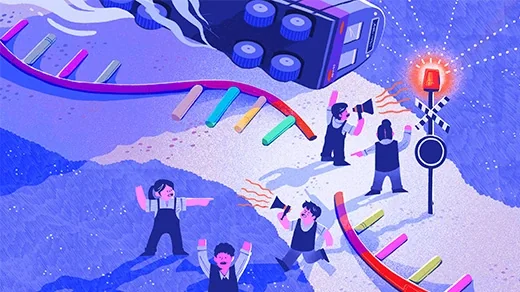
How does a cell know it has been damaged? Many of the signals involved in that recognition have been identified only recently, and they centre on RNA, the molecule usually associated with carrying instructions from DNA to the protein-making machinery. When something goes wrong, RNA becomes an alarm.
One trigger is double-stranded RNA, a form that should not normally be present in a healthy cell and is characteristic of viral infection. Another is the traffic jam that occurs when ribosomes stall on a faulty message, producing collisions that act as a distress signal. Both are detected by sensors that set off an inflammatory response, summoning help and, if necessary, shutting down protein production.
The system is powerful and therefore dangerous. Misfiring sensors are implicated in autoimmune conditions and in chronic inflammation, and the same pathways are being studied for their role in ageing and neurodegeneration. Understanding exactly which molecules count as evidence of damage, and how the threshold for alarm is set, is a central question in cell biology.