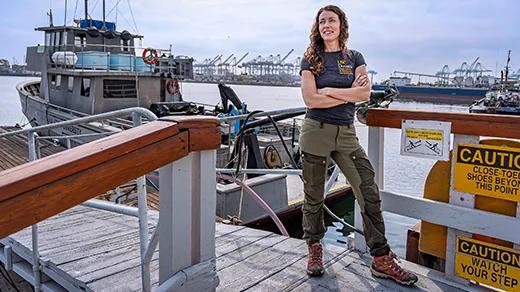
A decade ago, Karen Lloyd helped demonstrate that single-celled organisms live in the sediment and rock beneath the seafloor, in conditions of crushing pressure, near-freezing temperature and almost no available energy. Since then she has been trying to work out how they manage it, and how long they can persist.
The answer appears to involve extraordinary patience. These microbes metabolise at rates so slow that a single cell division may take hundreds or thousands of years. Their repair systems run continuously but sluggishly, and their energy budget is a tiny fraction of that of a surface-dwelling bacterium. Survival, in this world, is measured in geological time.
The implications extend beyond the ocean floor. If life can persist on such marginal energy supplies, the range of environments considered habitable expands considerably, both on Earth and on other planets. Lloyd's work also raises practical questions about how drilling, mining and waste storage might disturb communities that took millennia to establish, and whether any human timetable can sensibly account for organisms that operate on a geological one.