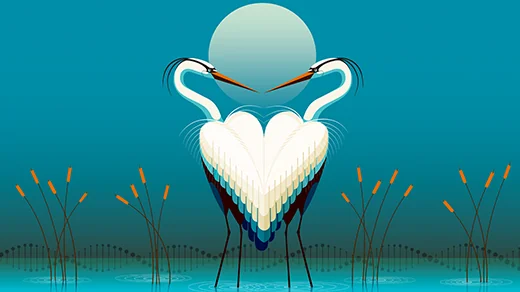
Why do birds have such extravagant plumage? The standard answer is natural selection: bright colours signal health to mates, and so they spread. Richard Prum finds that explanation incomplete. He argues that some of the most elaborate traits in birds evolved through aesthetic choice, in which the preferences of the choosers are themselves part of the evolutionary process rather than a fixed filter imposed by survival.
His account places beauty, and the pleasure it produces, at the centre of the story. If females vary in what they find attractive, and if those preferences are heritable, then the preferences and the traits they favour can coevolve, producing ornaments that serve no survival function at all. The peacock's tail is the classic example, and Prum contends it is not an exception but a general principle.
The argument is controversial because it restores a role for subjective experience in evolutionary explanation, something many biologists have been wary of. Prum insists this is not mysticism. Mate choice is a real behaviour with real consequences, and treating it as mere mechanism misses what is actually happening.