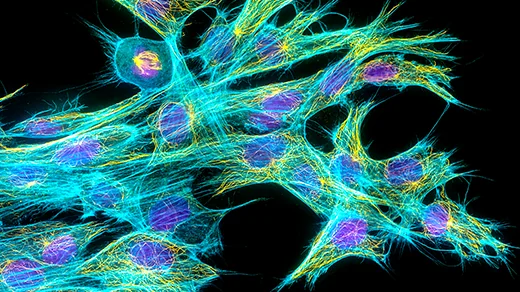
Complex life depends on an internal skeleton. Without filaments that can grow, shrink and push against membranes, cells could not change shape, move or divide reliably. The origin of that machinery is one of the central questions about how simple microbes became the ancestors of plants, animals and fungi, and new findings are narrowing the search.
Researchers have identified tubulin-like structures in Asgard archaea, a group of microbes that sit on the branch of the tree of life closest to eukaryotes. The proteins assemble into tubes with a geometry resembling the microtubules found in our own cells, suggesting that the building blocks of the eukaryotic cytoskeleton existed before eukaryotes themselves.
The discovery supports the view that the first complex cells inherited a toolkit rather than inventing one from nothing. It also sharpens a debate about how much of our cellular sophistication came from an ancient merger between two organisms. Each new structure found in these microbes makes the boundary between simple and complex life look more gradual.