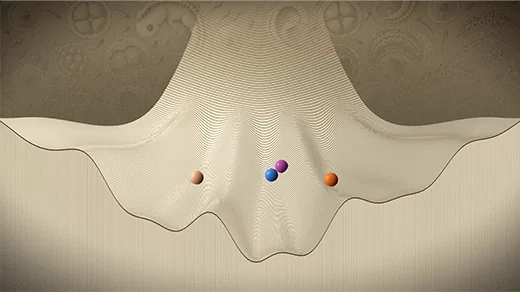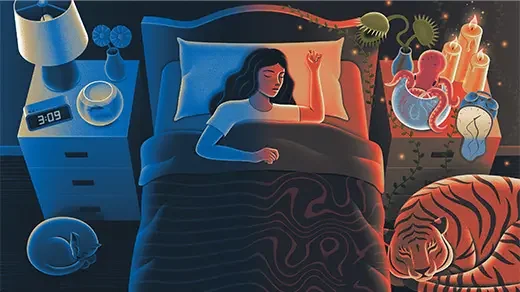
Falling asleep is not a switch. Between full wakefulness and deep sleep lies a shifting territory of drowsiness, drifting thought, partial awareness and sudden starts, and the boundary is crossed many times a night in both directions. Neuroscientists mapping this terrain are finding an unexpected variety of intermediate states, each with its own pattern of brain activity.
These liminal states matter clinically. Many sleep disorders arise not from too little sleep but from faulty transitions: the brain slips between states at the wrong moment, producing hallucinations, paralysis or fragmented rest. Narcolepsy, in which wakefulness intrudes into sleep and sleep into waking, is the clearest example of what happens when the gates between states fail.
Understanding the transitions is also changing how researchers think about consciousness. The intermediate zones are where awareness flickers in and out, offering a rare opportunity to observe which brain processes are necessary for experience and which are merely correlated with it. For clinicians, the practical payoff may be better ways to diagnose and treat the disorders that cluster around these fuzzy edges.