Twelve months of research produced a year's worth of surprises, and a few of them rearranged how biologists think about familiar problems. Among the highlights: a detailed map of the neurons beneath the skin that make touch pleasant or painful, new evidence that intelligence arose independently in birds and mammals, and a growing recognition that the boundary between neurons and the cells that support them is far blurrier than textbooks suggested.
Evolution supplied its share of stories, from the sudden bursts that generate new lineages to the ancient loops of DNA that allowed early life to control genes from a distance. Physicists and biologists continued their unlikely partnership, using fluid dynamics to explain embryonic folding and soft-matter theory to predict the shapes of microbial mats.
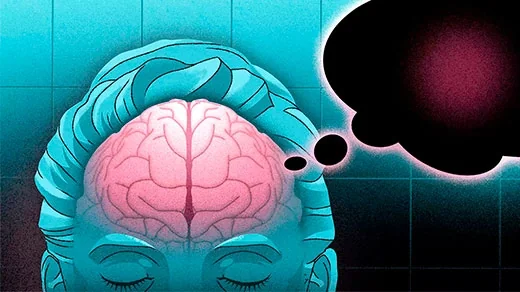
Perhaps the most persistent theme was the uneasy comparison between brains and artificial intelligence. As language models grew more capable, researchers kept returning to the differences: the brain's cellular diversity, its energy efficiency and its stubborn refusal to look like the systems we build. The contrast, many argued, is not a problem to be solved but a source of ideas.