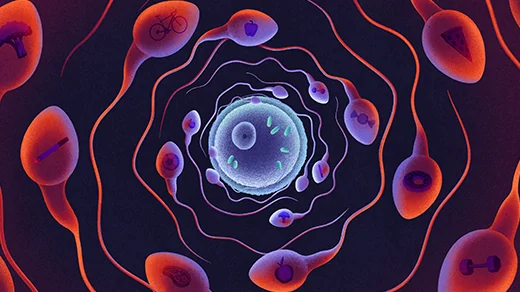
The idea that a father's experiences could influence his children was once considered fringe. Evidence has been accumulating, and it has become difficult to dismiss. Studies in humans and animals suggest that diet, exercise, chronic stress and exposure to nicotine can leave marks that travel in sperm and affect how the next generation develops.
DNA sequence is not the main carrier. Instead, researchers focus on small RNA molecules and chemical tags attached to DNA, both of which can change how genes are read without altering the letters themselves. Sperm carry a distinctive population of these RNAs, and their composition shifts in response to the father's condition.
The mechanism is far from fully understood, and the effects in humans are difficult to isolate from the many other influences on a child's development. Researchers are careful to distinguish well-supported findings from speculation. Still, the field is forcing a revision of a long-held assumption: that inheritance runs through genes alone and that the parental environment matters only after birth.