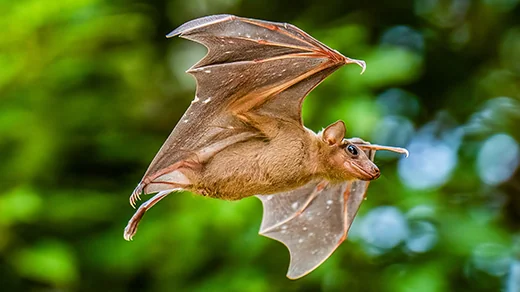
Finding your way home from an unfamiliar place requires more than a map. It requires knowing which direction you are facing, remembering where you came from and updating that knowledge as you move. Researchers studying bats on a remote island off the coast of Tanzania have recorded the activity of individual neurons that contribute to this sense of direction, offering an unusually detailed view of navigation in a wild animal.
The cells in question track heading: as the bat turns, they fire in sequence, effectively providing an internal compass. Others respond to specific locations or to the geometry of the environment. What makes the recordings valuable is that the animals were free to move across a natural landscape rather than a laboratory maze, revealing how these signals behave under realistic conditions.
The work connects decades of laboratory findings to the messy world animals actually inhabit. It also raises new questions about how navigation systems adapt when landmarks change or when an animal travels far beyond familiar territory, problems that both bats and humans must solve.