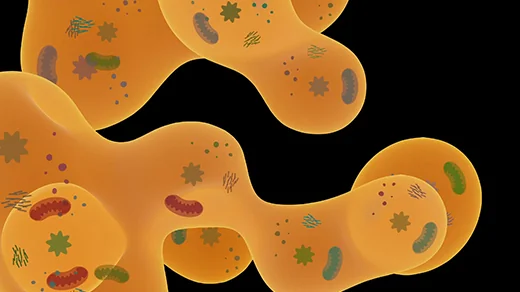
Textbook diagrams show the inside of a cell as a spacious chamber with organelles floating at a comfortable distance. Reality is closer to a rush-hour train. The cytoplasm is packed with proteins, filaments, vesicles and ribosomes, all jostling for room, and that crowding has profound effects on how molecules move and react.
For decades, almost everything known about cytoplasmic physics came from cells that had been flattened, extracted or otherwise disturbed. New imaging methods and genetic tools are finally allowing researchers to probe the interior of living animals, where the environment is thick, dynamic and full of structures that change from moment to moment.
Early results suggest that crowding is not a nuisance but a control knob. It can slow diffusion, encourage certain proteins to cluster and help organise reactions without membranes to separate them. Understanding these effects is essential for interpreting experiments performed in the comparatively roomy conditions of a test tube. It may also explain how cells keep thousands of simultaneous reactions from interfering with one another, a problem that has puzzled biochemists for generations.