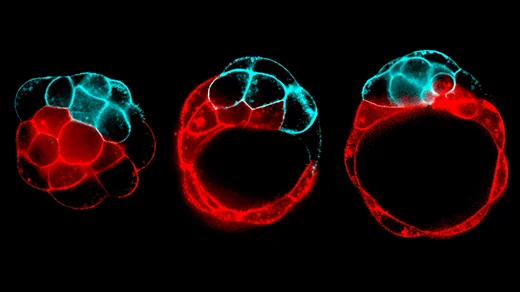
Growing tissues are under constant mechanical strain, and sometimes they break. That sounds like a problem, but biologists are discovering that controlled cracking is often part of the plan. Embryos use fracture to separate structures that need to come apart, and developing organs exploit the same physics to sculpt shapes that could not be formed by growth alone.
The process is more subtle than a simple tear. Tissues are held together by adhesion molecules and a fibrous scaffold, and how those components are distributed determines whether stress produces a clean split, a spreading crack or a smooth deformation. By adjusting their internal architecture, cells effectively choose which of these outcomes occurs.
The resulting structures are often stronger than the tissue they came from, because the break reorganises fibres in ways that distribute future loads. Researchers studying development now treat mechanics as a first-class ingredient alongside genetics. The protein.">genome supplies the components, but physics decides how they come apart. Understanding that division of labour is already changing how scientists model wound healing and how engineers think about materials that must fail gracefully.