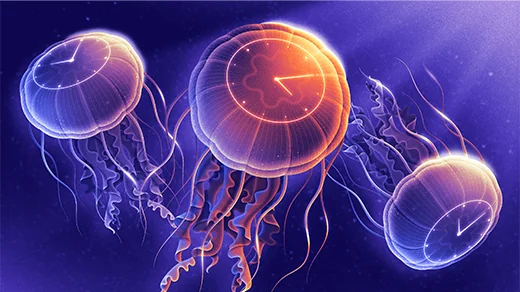
Circadian clocks are supposed to be one of biology's most conserved systems. The same core genes that keep time in a fruit fly also keep time in a mouse and, with variations, in you. So when biologists off the coast of Japan netted a pea-sized jellyfish and found a clock that did not fit the pattern, they paid attention.
The animal's timekeeping genes are arranged and regulated in ways that differ substantially from the textbook model, yet the jellyfish still anticipates the daily cycle, rising and settling on schedule. The discovery suggests that evolution has more than one way to build a biological clock, and that many of those alternatives may have gone unnoticed because researchers kept looking for the familiar version.
Marine organisms are a particularly promising place to search. Life in the ocean follows rhythms driven by tides, moonlight and migration as well as the sun, and the molecular machinery required to track those cycles may be correspondingly diverse. Each new clock that turns up broadens the definition of what a biological timekeeper can be.