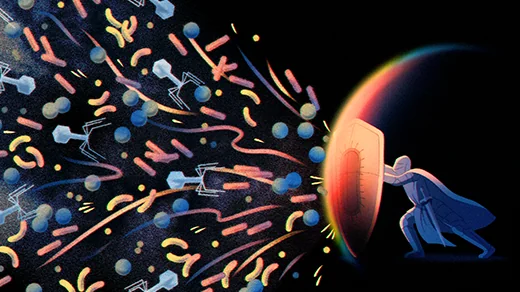
Your innate immune system responds to infection within minutes, before antibodies are made and before specialised cells have learned what they are fighting. That speed depends on sensors that detect molecular signatures of danger. New research shows that many of those sensors were not invented by animals at all. They were inherited, more or less intact, from bacteria and the viruses that prey on them.
The evidence comes from dozens of newly identified defence systems in microbes, several of which have direct counterparts in human cells. A sensor that detects foreign DNA in a bacterium looks strikingly similar to one that triggers inflammation in us. The pattern suggests that the components of immunity were assembled over billions of years, passed between lineages and repurposed for new purposes.
The practical consequences are significant. Many autoimmune and inflammatory conditions involve these ancient sensors firing when they should not. Understanding where they came from, and what they were originally built to do, gives researchers a different angle on diseases that have proved stubborn to treat.