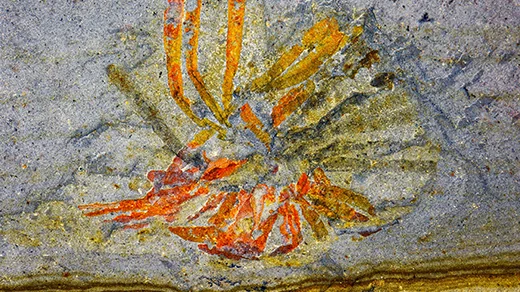
More than half a billion years ago, life on Earth underwent a burst of innovation so dramatic that palaeontologists gave it a name: the Cambrian explosion. Almost every major animal group alive today appears in the fossil record around this time, but the details of how and why have remained frustratingly murky. A newly described fossil bed in southern China is filling in some of the gaps.
The site preserves soft tissues with extraordinary fidelity, capturing eyes, guts, gills and appendages that normally decay without a trace. Roughly half the species uncovered are new to science, and many are small enough that earlier excavations would have missed them entirely. Together they offer a rare snapshot of a marine ecosystem near the end of the period, not just a handful of lucky specimens.
What the fossils show is a world already crowded with ecological roles. Predators, filter feeders and scavengers were all present, competing and consuming one another. The picture that emerges is less a sudden flash of invention than a rapid, messy proliferation, in which the basic architecture of animal life was tried out in many variations at once.