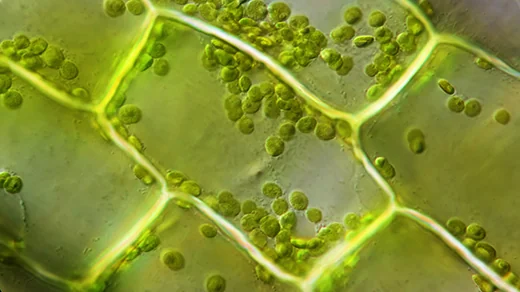
Inside every plant cell, sunlight is captured by chloroplasts, organelles packed with membranes that hold the machinery of photosynthesis. The arrangement of those membranes is not random. They are stacked into dense columns called grana, and the geometry of that stacking turns out to be a careful solution to a difficult problem.
The problem is that light is both fuel and hazard. Too little and the plant starves; too much and the same energetic molecules that drive photosynthesis start producing destructive compounds that bleach pigments and damage proteins. Stacking membranes increases capacity, but it also increases the risk that excess energy has nowhere safe to go.
Researchers studying the mathematics of the packing have found that grana adopt configurations that balance these competing pressures, adjusting in response to light conditions over hours and days. The geometry is not fixed; it is a dynamic compromise. For biologists trying to improve crop yields under changing climates, understanding that compromise is becoming as important as understanding the enzymes themselves.