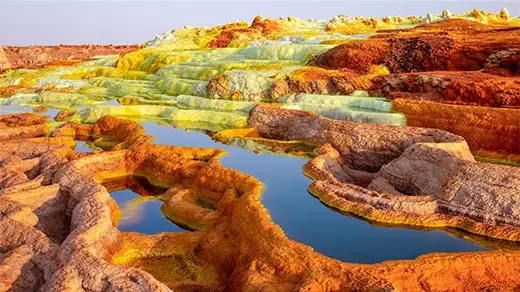
There are microbes that live in boiling hot springs, in salt lakes that would strip the water from your cells, in acid mine drainage and in rock kilometres below the surface. Some shrug off radiation doses that would kill a human many times over. These organisms are called extremophiles, and they are not merely curiosities.
Their tricks are instructive. Heat-loving microbes use enzymes that stay folded at temperatures where ordinary proteins unravel. Radiation-resistant species keep multiple copies of their protein.">genome and repair DNA with unusual efficiency. Salt-tolerant organisms balance their internal chemistry against an environment that would otherwise dehydrate them instantly. Each solution represents a different answer to the same question: how does life persist when conditions turn hostile?
The answers matter well beyond the laboratory. Industry already borrows heat-stable enzymes for manufacturing and research. Astrobiologists use extremophiles to reason about where life might survive on other worlds. And as climate change pushes familiar environments toward extremes, understanding resilience at the molecular level becomes a practical necessity rather than an academic one.