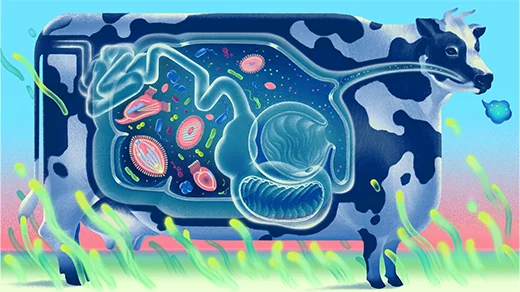
A cow's digestive system is a fermentation vat, and the microbes inside it are the real workers. They break down grass that the animal itself cannot digest, and in return they get a warm, steady home. One group of these microbes produces methane, a potent greenhouse gas that the cow then releases into the atmosphere. Understanding that chemistry in detail has become a serious climate question.
Researchers have now described a structure inside one of those microbes that helps explain how the process works. The organelle-like compartment appears to concentrate the reactions that generate methane, making the microbe unusually efficient. Because the microbe lives inside another microbe, which in turn lives inside the cow, the discovery is a reminder of how many nested layers of biology shape a single burp.
For farmers and climate scientists the stakes are practical. Livestock account for a meaningful share of global methane emissions, and reducing them requires knowing exactly where the gas comes from. Feed additives, breeding programs and microbiome interventions all depend on understanding this microscopic chain of command.